
Listen to this podcast in the app for free: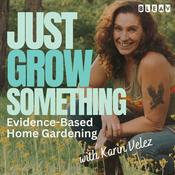 Download for free in the App Store
radio.net
Sleep timer
Save favorites
361 episodes
Overwintering Tender Garden Plants - Ep. 323
10/20/2026 | 36 mins.Every fall I look at my pepper plants loaded with fruit and my rosemary at its biggest, and I hate the idea of handing them over to the first hard freeze. The good news is you don't have to. Peppers, rosemary, and geraniums are all perennials somewhere in the world, and basil will keep going for a while on a windowsill if you start it right. But whether a plant makes it to spring gets decided mostly before it ever comes through the door.
In this episode we're talking about which plants are worth the space, when to bring them in, and whether to keep them growing, put them to sleep, or just take cuttings. Then we'll get into my step-by-step for leaving aphids, spider mites, whiteflies, and fungus gnats outside, including why dish soap isn't the same as insecticidal soap and how long to keep new arrivals away from your houseplants. We'll finish with plant-by-plant care for peppers, rosemary, basil, and geraniums, plus a place where the experts don't agree.
Let’s dig in.
Get your fair-trade, organic coffee and support the show at https://LarrysCoffee.com/JustGrow
Root Boost Rooting Hormone: https://amzn.to/4BeOCWX
Pure Castile Soap for insecticidal soap: https://amzn.to/3U0HnBb
References and Resources:
Pests and Insecticidal Soap
Iowa State University Extension and Outreach, Yard and Garden — Can I Use Dish Soap Instead of Insecticidal Soap to Treat for Insect Pests? (detergent vs. true soap, phytotoxicity, contact-only action, reapplying): https://yardandgarden.extension.iastate.edu/faq/can-i-use-dish-soap-instead-insecticidal-soap-treat-insect-pests
University of Florida IFAS Gardening Solutions — Soaps, Detergents and Pest Management (don't treat drought-stressed plants or above 90°F): https://gardeningsolutions.ifas.ufl.edu/care/pests-and-diseases/pests/soaps-detergents-and-pest-management/
Nebraska Extension in Lancaster County — Washing Pests Away, Sarah Browning (2–3 applications at 4–7 day intervals, testing a small area first): https://lancaster.unl.edu/washing-pests-away/
University of Minnesota Extension — Houseplant Pests (spider mite white paper tap test, mealybugs, fungus gnat management): https://extension.umn.edu/news/houseplant-pests
Iowa State University Extension and Outreach, Yard and Garden — Spider Mites on Houseplants (dry winter air, stippling, webbing, rinsing in the shower): https://yardandgarden.extension.iastate.edu/article/2007/12-5/SpiderMites.html
Iowa State University Extension and Outreach, Yard and Garden — Fungus Gnats in Houseplants (overwatering, letting soil dry): https://yardandgarden.extension.iastate.edu/article/2023/02/fungus-gnats-houseplants
Peppers
New Mexico State University, Southwest Yard & Garden — Chiles Can Be Grown Year-Round if They Are Brought Indoors (south window with about 4 hours of sun, nights around 50°F, underwatering losses, monthly fertilizer): https://swyg.nmsu.edu/2014/101814.html
New Mexico State University, Southwest Yard & Garden — Chiles for New Mexico Holiday Houseplants (chiles as frost-tender perennials): https://swyg.nmsu.edu/2007/110307.html
Ask Extension — Overwintering Peppers (nights above 50°F, days around 70°F, artificial light for fruiting; hot peppers more resilient; dormancy option): https://ask.extension.org/kb/faq.php?id=855650
Rosemary
University of Illinois Extension, The Garden Scoop — Rosemary, Ryan Pankau (50–60°F indoors, very bright light, hardiness zone 7, 'Arp' and 'Hill Hardy' to zone 6, outdoor protection): https://extension.illinois.edu/blogs/garden-scoop/2018-10-18-rosemary
Nebraska Extension in Lancaster County — Rosemary, An Herb for All Seasons, Sarah Browning (zones 7–10, 50–55°F indoors, watering): https://lancaster.unl.edu/rosemary-herb-all-seasons
University of Arkansas Cooperative Extension — Rosemary, Janet B. Carson (overwatering as the biggest indoor risk, coolest sunny room, holiday topiaries): https://www.uaex.uada.edu/yard-garden/home-landscape/adgrosemaryjan2018.pdf
University of Wisconsin Plant Disease Diagnostics Clinic — November 2020: Houseplant Horrors (powdery mildew on rosemary indoors, kitchen humidity): https://pddc.wisc.edu/2020/11/11/november-2020-houseplant-horrors/
Basil and Indoor Herbs
Brindisi, L.J., & Simon, J.E. (2023). Preharvest and postharvest techniques that optimize the shelf life of fresh basil (Ocimum basilicum): a review. Frontiers in Plant Science 14: 1237577 (chilling injury below about 54°F and severe below 50°F): https://doi.org/10.3389/fpls.2023.1237577
University of Illinois Extension, Flowers, Fruits, and Frass — Growing Basil in Your Backyard, Brittnay Haag (tender annual, flowering makes plants woody and bitter, digging before frost extends the season): https://extension.illinois.edu/blogs/flowers-fruits-and-frass/2020-05-13-growing-basil-your-backyard
Cornell Cooperative Extension Tompkins County — Herbs for Your Winter Windowsill, Pat Curran (digging basil in late summer, cutting back by a third to a half, rosemary leaves don't wilt, 1-gallon pots, separating outdoor plants from houseplants): https://bpb-us-e1.wpmucdn.com/blogs.cornell.edu/dist/c/10116/files/Windowsill-Herbs-Pat-Curran-March-2017-21jwe6n.pdf
University of Illinois Extension — Keep Growing Herbs Indoors This Fall, Winter, Christopher Enroth (6–8 hours of bright light, 12–16 hours under lights, 70°F or below): https://extension.illinois.edu/news-releases/keep-growing-herbs-indoors-fall-winter
Iowa State University Extension and Outreach, Yard and Garden — Can I Grow Herbs Indoors Over the Winter? (rosemary may need grow lights, clay pots, watering): https://yardandgarden.extension.iastate.edu/faq/can-i-grow-herbs-indoors-over-winter
University of Minnesota Extension — Basil Downy Mildew (symptoms, remove infected plants, Genovese susceptibility, DMR varieties): https://extension.umn.edu/diseases/basil-downy-mildew
Geraniums
University of Illinois Extension, Good Growing — How to Overwinter Geraniums for Next Year's Garden, Ken Johnson (three methods, 45–50°F bare-root storage, cuttings root in 4–8 weeks): https://extension.illinois.edu/blogs/good-growing/2024-10-11-how-overwinter-geraniums-next-years-garden
Iowa State University Extension and Outreach, Yard and Garden — How Can I Over-Winter My Geraniums Indoors? (65–70°F, March pruning, 45–55°F bare-root storage, cuttings root in 6–8 weeks): https://yardandgarden.extension.iastate.edu/faq/how-can-i-over-winter-my-geraniums-indoors
University of Wisconsin–Madison Division of Extension — Overwintering Tender Geraniums, Margaret Murphy (60–65°F, optional root soaking, soaked vs. dry comparison, cuttings as backup): https://hort.extension.wisc.edu/overwintering-tender-geraniums
Missouri Botanical Garden — How Can I Overwinter My Geranium Plants? (cuttings root in 3–4 weeks, modern basements too warm and dry, soaking roots every few weeks): https://www.missouribotanicalgarden.org/gardens-gardening/your-garden/help-for-the-home-gardener/advice-tips-resources/gardening-help-faqs/question/1374/how-can-i-overwinter-my-geranium-plants
Just Grow Something: https://justgrowsomething.com
Gardening Courses: https://justgrowsomething.com/courses
Just Grow Something Merch and Downloads: https://justgrowsomething.com/shop
Just Grow Something Gardening Friends Facebook Group: https://www.facebook.com/share/g/18YgHveF5P/
Check out how you can become a patron on Patreon: https://www.patreon.com/JustGrowSomething
Feed my coffee habit: https://buymeacoffee.com/justgrowsomething
Amazon storefront: https://www.amazon.com/shop/justgrowsomething
Hosted by Simplecast, an AdsWizz company. See pcm.adswizz.com for information about our collection and use of personal data for advertising.Seed Saving: Harvesting, Drying and Storing for Next Season - Ep. 322
10/13/2026 | 43 mins.Every fall somebody asks me if they can save the seeds from that amazing tomato or melon they just ate, and the answer is "maybe." Whether a saved seed grows into the plant you loved gets decided twice. The first time is months earlier, when the flower was pollinated, and the second is after harvest, when the seed either stays in the right conditions or doesn't.
In this episode we're covering both. We'll talk about hybrids versus open-pollinated and heirloom varieties, which crops are easiest for beginners, why your zucchini and your pumpkin can cross but your cucumber and your cantaloupe can't, and why peppers cross more often than most people think.
Then we'll get into harvesting and cleaning seeds, including what tomato seed fermentation does and doesn't do for seedborne disease, how to dry seeds without cooking them, the simple temperature-plus-humidity rule for storage, and why seed longevity charts don't agree with each other.
Let’s dig in.
Get your free gift, great coffee, and support the show at https://larryscoffee.com/justgrow
Tell me about your garden goals and challenges, get a quote, and get on my calendar: https://JustGrowSomething.com/gardenconsulting
Six Steps for Saving Seeds From Your Garden: https://justgrowsomethingpodcast.com/blog/six-steps-for-saving-seeds-from-your-garden
References and Resources
Choosing Crops, Pollination, and Isolation
University of Minnesota Extension — Saving Vegetable Seeds (open-pollinated vs. hybrid, cross-pollination, harvesting, storage, bacterial canker and seed treatments): https://extension.umn.edu/planting-and-growing-guides/saving-vegetable-seeds
University of Illinois Extension — How to Save Seeds (terms, isolation methods, isolation distance table, wet and dry harvesting): https://extension.illinois.edu/sites/default/files/how_to_save_seeds_062021.pdf
University of Maryland Extension — Seed Saving 101: Vegetables (three levels of seed saving, tomato and potato-leaf isolation, pepper species crossing, squash after-ripening, storage rule of thumb): https://extension.umd.edu/sites/extension.umd.edu/files/2021-02/Seed%20Saving%20Veggies%20Resources.pdf
UC Agriculture and Natural Resources, Orange County 4-H — Saving Seed from the Three Sisters and Tomatoes (population sizes for home gardens): https://oc4h.ucanr.edu/sites/default/files/2016-09/248080.pdf
NC State Extension, Onslow County — Saving Your Own Seed (hot and sweet pepper crossing): https://onslow.ces.ncsu.edu/2023/01/saving-your-own-seed/
Barchenger, D.W., et al. (2025). Producing High Quality Pepper Seed. World Vegetable Center, Publication No. 25-1099 (pepper outcrossing rates, bee visitation, seed moisture): https://worldveg.tind.io/record/76153/files/25-1099_Producing%20high%20quality%20pepper%20seed.pdf
Harvesting, Cleaning, and Seedborne Disease
Oregon State University Extension — Collecting and Storing Seeds From Your Garden (crop-by-crop harvesting, hand-pollinating squash, bean weevils, longevity groups, germination testing): https://extension.oregonstate.edu/gardening/techniques/collecting-storing-seeds-your-garden
Pradhanang, P.M., & Collier, G. (2009). How effective is hydrochloric acid treatment to control Clavibacter michiganensis michiganensis contamination in tomato seed? Acta Horticulturae 808: 81–86 (overnight fermentation vs. washing): https://doi.org/10.17660/ActaHortic.2009.808.10
Drying, Storage, and Longevity
Colorado State University Extension — Storing Vegetable and Flower Seeds, Fact Sheet 7.221 (drying temperatures, seed moisture, humidity, hard seed, federal minimum germination and longevity table): https://extension.colostate.edu/resource/storing-vegetable-and-flower-seeds/
University of Delaware Cooperative Extension, Weekly Crop Update — Storing Vegetable Seed (temperature-plus-humidity rule, storage life halving rules, freezing seed): https://sites.udel.edu/weeklycropupdate/?p=2967
Hosted by Simplecast, an AdsWizz company. See pcm.adswizz.com for information about our collection and use of personal data for advertising.Preserving Without Canning - Ep. 321
10/06/2026 | 42 mins.Canning gets most of the attention, but for a lot of what comes out of the garden, it isn't the best way to put food up. In this episode, we're opening up the rest of the preserving toolbox: freezing, drying, fermenting, refrigerator pickles, and good old-fashioned cold storage.
We'll talk about why skipping the blanch (or cutting it short) costs you flavor and color in the freezer, which vegetables you can freeze raw, and why a full freezer rides out a power outage twice as long as a half-empty one. Then we'll get into drying in a humid climate, why vegetables need a blanch before the dehydrator, and what the research does and doesn't say about home freeze dryers.
We'll make a simple, safe batch of sauerkraut, cover the one rule for fridge pickles, and wrap up with the temperature and humidity each storage crop wants, from potatoes and onions to carrots, sweet potatoes, and apples. There's a crop-by-crop quick-reference chart to download, and a fantastic fermenting book to check out.
Let’s dig in!
References and Resources:
Larry's Coffee (affiliate): https://LarrysCoffee.com/JustGrow
Download the preserving guide: https://justgrowsomethingpodcast.com/preserve
Fermented Vegetables by Kristen and Christopher Shockey: https://amzn.to/4zjI2g4
Freezing
National Center for Home Food Preservation — Blanching Vegetables: https://nchfp.uga.edu/how/freeze/freeze-general-information/blanching-vegetables/
National Center for Home Food Preservation — Freezing Tomatoes: https://nchfp.uga.edu/how/freeze/vegetable/freezing-tomatoes/
National Center for Home Food Preservation — Freezing Onions: https://nchfp.uga.edu/how/freeze/vegetable/freezing-onions/
National Center for Home Food Preservation — Freezing Bell or Sweet Peppers: https://nchfp.uga.edu/how/freeze/vegetable/freezing-bell-or-sweet-peppers/
National Center for Home Food Preservation — Freezing Hot Peppers: https://nchfp.uga.edu/how/freeze/vegetable/freezing-hot-peppers/
National Center for Home Food Preservation — Foods That Do Not Freeze Well: https://nchfp.uga.edu/how/freeze/freeze-general-information/foods-that-do-not-freeze-well/
North Dakota State University Extension — Freezing Vegetables (blanching times, freezer loading, storage time): https://www.ndsu.edu/agriculture/extension/publications/freezing-vegetables
University of Minnesota Extension — How to Freeze Fruit Safely: https://extension.umn.edu/food/preparing/cooking-at-home/food-preservation/freezing/freezing-fruit
NC State Extension, Guilford County — Put a Freeze on Foodborne Illness: https://guilford.ces.ncsu.edu/2020/10/put-a-freeze-on-foodborne-illness
University of Illinois Extension — Power Outages: https://extension.illinois.edu/food-safety/power-outages
Li, L., Pegg, R. B., Eitenmiller, R. R., Chun, J. Y., & Kerrihard, A. (2017). Selected nutrient analyses of fresh, fresh-stored, and frozen fruits and vegetables. Journal of Food Composition and Analysis: https://doi.org/10.1016/j.jfca.2017.02.002
Drying and Freeze-Drying
National Center for Home Food Preservation — Food Dehydrators: https://nchfp.uga.edu/how/dry/drying-general/food-dehydrators/
National Center for Home Food Preservation — Sun Drying: https://nchfp.uga.edu/how/dry/drying-general/sun-drying/
National Center for Home Food Preservation — Packaging and Storing Dried Foods: https://nchfp.uga.edu/how/dry/drying-general/packaging-and-storing-dried-foods/
Penn State Extension — Let's Preserve: Drying Fruits and Vegetables (Dehydration): https://extension.psu.edu/lets-preserve-drying-fruits-and-vegetables-dehydration
Colorado State University Extension — Drying Vegetables, Fact Sheet 9.308: https://extension.colostate.edu/resource/drying-vegetables/
University of Minnesota Extension — Preserving Herbs by Freezing or Drying: https://extension.umn.edu/preserving-and-preparing/preserving-herbs-freezing-or-drying
South Dakota State University Extension — Preserving Herbs: https://extension.sdstate.edu/preserving-herbs
Utah State University Extension — Buying a Home Freeze-Dryer: What to Know Before You Go: https://extension.usu.edu/preserve-the-harvest/research/buying-a-home-freeze-dryer-what-to-know-before-you-go
Utah State University Extension — Can I Freeze-Dry That? A Practical Guide to Safe and Effective Freeze-Drying: https://extension.usu.edu/foodsafety/research/can-i-freeze-dry-that-a-practical-guide-to-safe-and-effective-freeze-drying
Fermenting and Refrigerator Pickles
North Dakota State University Extension — Sauerkraut: From Garden to Table: https://www.ndsu.edu/agriculture/extension/publications/sauerkraut-garden-table
Penn State Extension — Tips for Making Sauerkraut: https://extension.psu.edu/tips-for-making-sauerkraut
UConn Extension — Fermentation: Preservation with Benefits: https://extension.uconn.edu/?p=3394
University of Florida IFAS Extension — Fermented Foods: Sauerkraut, FS474: https://ask.ifas.ufl.edu/publication/FS474
NC State Extension Food Safety — How to Make Quick Refrigerator Pickles: https://foodsafety.ces.ncsu.edu/news/how-to-make-quick-refrigerator-pickles/
Cold Storage
University of Missouri Extension — Home Storage of Fruits and Vegetables in Root Cellars, MP562: https://extension.missouri.edu/publications/mp562
Iowa State University Extension and Outreach — Storing Winter Storage Vegetables: https://yardandgarden.extension.iastate.edu/how-to/storing-winter-storage-vegetables
Iowa State University Extension and Outreach — Growing Carrots and Parsnips: https://yardandgarden.extension.iastate.edu/how-to/growing-carrots-and-parsnips
Just Grow Something: https://justgrowsomething.com
Gardening Courses: https://justgrowsomething.com/courses
Just Grow Something Merch and Downloads: https://justgrowsomething.com/shop
Just Grow Something Gardening Friends Facebook Group: https://www.facebook.com/share/g/18YgHveF5P/
Check out how you can become a patron on Patreon: https://www.patreon.com/JustGrowSomething
Feed my coffee habit: https://buymeacoffee.com/justgrowsomething
Amazon storefront: https://www.amazon.com/shop/justgrowsomething
Hosted by Simplecast, an AdsWizz company. See pcm.adswizz.com for information about our collection and use of personal data for advertising.Home Canning Myths Debunked - Ep. 320
09/29/2026 | 34 mins.A jar that seals is a jar that seals, and that's about all it tells you. In this episode, we're taking on four home canning myths that keep circulating in gardening groups, on food blogs, and in family recipe boxes: oven canning, open-kettle canning (and its cousin, flipping jars upside down), packing tomatoes and garlic in oil, and the idea that a salsa recipe can be tweaked however you like as long as it tastes right.
For each one, we'll look at what the research from the National Center for Home Food Preservation and university extension services shows, why these methods fail, and what to do instead so your harvest stays on the pantry shelf and out of the danger zone.
We'll also look at a study that checked 56 salsa canning recipes from food blogs, and what it found might make you rethink where your recipes come from. Let's dig in!
Support the show and get your free gift at https://LarrysCoffee.com/JustGrow
References and Resources:
National Center for Home Food Preservation — Ensuring Safe Canned Foods: https://nchfp.uga.edu/how/can/general-information/ensuring-safe-canned-foods/
National Center for Home Food Preservation — Equipment and Methods Not Recommended: https://nchfp.uga.edu/how/can/general-information/equipment-and-methods-not-recommended/
National Center for Home Food Preservation — General Information (includes the 1943 history on oven and open-kettle canning): https://nchfp.uga.edu/how/can/general-information/
National Center for Home Food Preservation — Identifying and Handling Spoiled Canned Food: https://nchfp.uga.edu/how/can/general-information/identifying-and-handling-spoiled-canned-food/
National Center for Home Food Preservation — Tomato Acidification Directions: https://nchfp.uga.edu/how/can/how-do-i-can-tomatoes/tomato-acidification-directions/
National Center for Home Food Preservation — Freezing Garlic-in-Oil: https://nchfp.uga.edu/how/freeze/vegetable/freezing-garlic-in-oil/
National Center for Home Food Preservation — Burning Issue: Can I Can My Own Salsa Recipe? (PDF): https://boone.mgcafe.uky.edu/files/nchfp_burning_issue_can_i_can_my_own_salsa_recipe.pdf
D'Sa et al. (2007), Survey of Home Canning Practices and Safety Issues in the U.S.: https://nchfp.uga.edu/papers/2007/canning_survey.html
Nummer et al. (2004), Studies on Safe Acidification of Salsa for Home Boiling Water Canning: https://nchfp.uga.edu/papers/2004/04ift-tomatosalsaPoster_combined.html
Nummer et al. (2011), Current Food Safety Issues of Home-Prepared Vegetables and Herbs Stored in Oil, Food Protection Trends (PDF): https://www.foodprotection.org/files/food-protection-trends/Jun-11-Nummer.pdf
Savoie & Perry (2019), Adherence of Food Blog Salsa Recipes to Home Canning Guidelines, Food Protection Trends: https://www.foodprotection.org/publications/food-protection-trends/archive/2019-09-adherence-of-food-blog-salsa-recipes-to-home-canning-guidelines/
University of Maine Cooperative Extension — The Missing Ingredient: Food Blog Salsa Recipes: https://extension.umaine.edu/food-health/2023/07/20/the-missing-ingredient-adherence-of-food-blog-salsa-recipes-to-home-canning-guidelines/
Penn State Extension — Say No to Oven Canning: https://extension.psu.edu/say-no-to-oven-canning
Penn State Extension — Avoid Open Kettle Canning: Always Process Canned Goods: https://extension.psu.edu/avoid-open-kettle-canning-always-process-canned-goods
Penn State Extension — Caution: Canning with Fats and Oils: https://extension.psu.edu/caution-canning-with-fats-and-oils
Oregon State University Extension Service — Herbs and Vegetables in Oil, SP 50-701: https://extension.oregonstate.edu/catalog/pub/sp-50-701-herbs-vegetables-oil
Oregon State University Extension Service — Preserving Garlic: https://extension.oregonstate.edu/food/preservation/preserving-garlic
UC Agriculture and Natural Resources — Garlic: Safe Methods to Store, Preserve, and Enjoy, Pub. 8568 (PDF): https://ucanr.edu/sites/default/files/2020-09/335681.pdf
Colorado State University Extension — Botulism, Fact Sheet 9.305: https://extension.colostate.edu/resource/botulism/
Just Grow Something: https://justgrowsomething.com
Gardening Courses: https://justgrowsomething.com/courses
Just Grow Something Merch and Downloads: https://justgrowsomething.com/shop
Just Grow Something Gardening Friends Facebook Group: https://www.facebook.com/share/g/18YgHveF5P/
Check out how you can become a patron on Patreon: https://www.patreon.com/JustGrowSomething
Feed my coffee habit: https://buymeacoffee.com/justgrowsomething
Amazon storefront: https://www.amazon.com/shop/justgrowsomething
Hosted by Simplecast, an AdsWizz company. See pcm.adswizz.com for information about our collection and use of personal data for advertising.End-of-Season Tomato Rescue: Ripening, Freezing, and Preserving - Ep. 319
09/22/2026 | 30 mins.Frost is on the way, and the vines are still loaded with green tomatoes. In this episode, we sort out which green tomatoes will finish ripening on your counter (the mature greens and the blushers) and which ones belong in the skillet, the freezer, or a tested relish recipe.
You'll learn what cold does to a tomato, why a stretch of chilly weather can cost you ripening ability before frost ever shows up, and four ways to ripen fruit indoors, including how to stage a harvest for a steady supply into November.
Then we dig into the canning rule that catches a lot of gardeners off guard. National home-canning guidance says not to can tomatoes from dead or frost-killed vines, and we look at why, what the research does and doesn't show, and what to do with those tomatoes instead.
Grab a notebook and let’s dig in!
Resources and References:
Grab your bag of Larry's Coffee, support the show, and get a free gift! https://larryscoffee.com/justgrow
Colorado State University Extension — Ripening Tomatoes Indoors: https://extension.colostate.edu/resource/ripening-tomatoes-indoors/
University of California, Davis, Postharvest Research and Extension Center (Suslow and Cantwell) — Tomato: Recommendations for Maintaining Postharvest Quality: https://postharvest.ucdavis.edu/produce-facts-sheets/tomato
Iowa State University Extension and Outreach — Can I ripen green tomatoes indoors before frost?: https://yardandgarden.extension.iastate.edu/faq/can-i-ripen-green-tomatoes-indoors-frost
National Center for Home Food Preservation (University of Georgia) — Canning Tomatoes: Introduction: https://nchfp.uga.edu/how/can/how-do-i-can-tomatoes/canning-tomatoes-introduction/
National Center for Home Food Preservation — Resources for Home Preserving Tomatoes: https://nchfp.uga.edu/resources/entry/resources-for-home-preserving-tomatoes
USDA Complete Guide to Home Canning, Guide 3 (electronic version by Utah State University Extension, 1995) — Selecting, Preparing, and Canning Tomatoes and Tomato Products: https://digitalcommons.usu.edu/cgi/viewcontent.cgi?article=1600&context=extension_histall
National Center for Home Food Preservation — Freezing Tomatoes: https://nchfp.uga.edu/how/freeze/vegetable/freezing-tomatoes/
National Center for Home Food Preservation — Freezing Green Tomatoes: https://nchfp.uga.edu/how/freeze/vegetable/freezing-green-tomatoes/
Just Grow Something: https://justgrowsomething.com
Gardening Courses: https://justgrowsomething.com/courses
Just Grow Something Merch and Downloads: https://justgrowsomething.com/shop
Just Grow Something Gardening Friends Facebook Group: https://www.facebook.com/share/g/18YgHveF5P/
Check out how you can become a patron on Patreon: https://www.patreon.com/JustGrowSomething
Feed my coffee habit: https://buymeacoffee.com/justgrowsomething
Amazon storefront: https://www.amazon.com/shop/justgrowsomething
Hosted by Simplecast, an AdsWizz company. See pcm.adswizz.com for information about our collection and use of personal data for advertising.
More Home & Garden podcasts




Trending Home & Garden podcasts

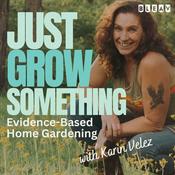
About Just Grow Something | Evidence-Based Home Gardening
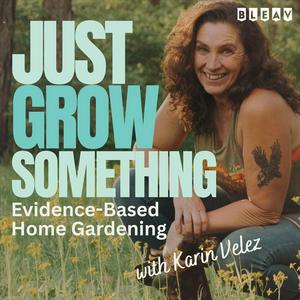
Grow a better vegetable garden, whether you're a seasoned gardener or have never grown a thing in your life. Karin helps home gardeners learn to grow their own food using evidence-based techniques and research. She talks all about specific plants, pests, diseases, soil and plant health, mulch, garden planning, and more. It's not just the "how" but also the "why" that makes us better. The goal? For everyone to know how to grow their own food no matter what sized space they have or their experience level.
Tune in each week to plan, learn, and grow with your friend in the garden, Karin Velez.
Podcast websiteListen to Just Grow Something | Evidence-Based Home Gardening, Pioneering Today Podcast - Homesteading in a Modern World and many other podcasts from around the world with the radio.net app
Get the free radio.net app
- Stations and podcasts to bookmark
- Stream via Wi-Fi or Bluetooth
- Supports Carplay & Android Auto
- Many other app features
Get the free radio.net app
- Stations and podcasts to bookmark
- Stream via Wi-Fi or Bluetooth
- Supports Carplay & Android Auto
- Many other app features

Just Grow Something | Evidence-Based Home Gardening
Scan code,
download the app,
start listening.
download the app,
start listening.
Just Grow Something | Evidence-Based Home Gardening: Podcasts in Family
 USA
USA
